

Signing in should take seconds, not stress. Yet the sign-in screen is where most account headaches begin — a forgotten password typed three times in a row, a mobile browser that refuses to hold a session, or a verification email that quietly lands in the promotions folder. On our platform we treat the login step as part of the player experience rather than an afterthought, and this page explains exactly how it works from an Australian player’s point of view.
Below you’ll find the practical detail: how to get in from a desktop or a phone, what each error message actually means, how to protect your credentials properly, and how account access ties into the safer gambling controls we make available. We’ve written it for real situations — travelling interstate, switching from Telstra mobile data to home Wi-Fi, sharing a laptop with a flatmate — not for a perfect textbook scenario.
One note before we start, because it matters here. Under the Interactive Gambling Act 2001, offering online casino products to residents of Australia is prohibited, and the ACMA enforces that framework. The information on this page is educational: it describes how account access, credential security and self-exclusion tooling function in the broader Vegastars Casino ecosystem, so that Aussie readers can make informed, well-protected decisions about any gambling account they hold.
How Our Sign-In System Is Built
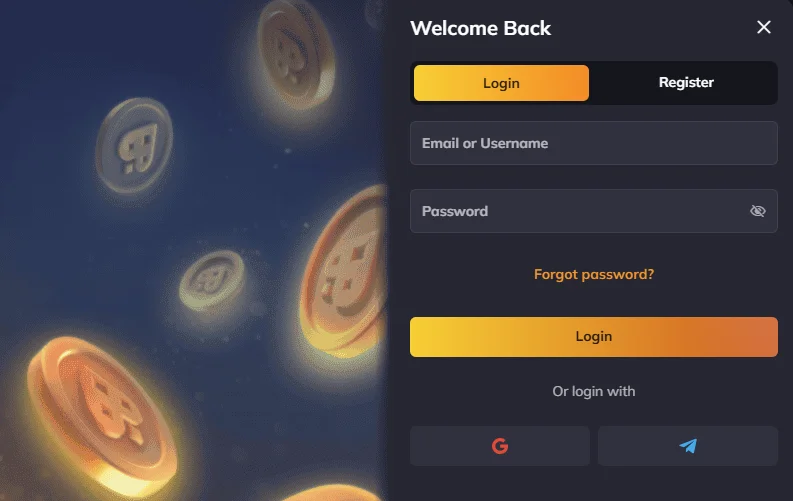
Our authentication runs on a single credential pair — the email address you registered with and a password only you know — layered with optional second-factor confirmation. There is no separate “member number” to remember and no legacy username system to trip you up. Whatever device you pick up, the same two details open the door.
Session handling is deliberately conservative. An active session on our website stays warm for a limited window of inactivity before it expires, and any sign-in from an unrecognised device or a new IP range triggers a confirmation prompt. Players occasionally find that mildly annoying; we’d rather annoy you for four seconds than let a stranger walk into a funded account.
The account area you land in after sign-in is where the useful controls live — banking history, bonus status, verification documents, session reminders and limit settings. We keep all of it behind the login wall on purpose, because those settings are personal and should never be reachable from a public page.
Signing In From Desktop, Mobile and Tablet
The flow is identical across devices, though the button placement shifts on smaller screens. If you’re on a phone, the entry point sits inside the hamburger menu at the top corner rather than in the header bar. Follow the sequence below and you’ll be through in under a minute.
- Open our website in your preferred browser — Chrome, Safari, Edge and Firefox are all fully supported on current versions.
- Select the sign-in control in the top navigation, or open the menu drawer first if you’re on a mobile handset.
- Enter the email address used at registration. Type it manually at least once rather than trusting autofill, which frequently stores an old or misspelt address.
- Enter your password. Use the eye icon to reveal the characters if you’re confident nobody is looking over your shoulder.
- Complete the second-factor step if you’ve enabled it — a six-digit code from your authenticator app or a one-time code sent to your registered mobile.
- Confirm, and you’ll be directed straight to your account dashboard with balance and pending bonuses visible.
A practical tip for tablet users: if you regularly switch between an iPad and a laptop, keep your credentials in a dedicated password manager rather than the browser’s built-in vault. Browser vaults don’t always sync cleanly across operating systems, and that mismatch is behind a surprising share of “my password stopped working” reports.
Decoding Sign-In Errors and Fixing Them Fast
Most access problems fall into a handful of recognisable categories, and nearly all of them are solvable without contacting anyone. The table below maps the messages our players see most often against their real underlying cause and the fastest fix.
| What you see | What’s actually happening | Fastest fix |
|---|---|---|
| Credentials not recognised | Typo, wrong email variant, or caps lock engaged | Retype both fields manually, then reset the password if it fails twice |
| Account temporarily locked | Too many failed attempts within a short window | Wait out the cool-down period, then use the reset link rather than guessing again |
| Verification code never arrives | Filtered email, outdated mobile number, or carrier delay | Check spam and promotions folders, then request a resend after 60 seconds |
| Page reloads without signing in | Blocked cookies or an aggressive privacy extension | Allow cookies for the domain and disable the extension for that tab |
| Session drops repeatedly | Unstable connection or a browser clearing data on close | Switch networks and turn off “clear cookies on exit” in browser settings |
| Access restricted notice | Self-exclusion, a cooling-off period, or pending verification | Complete verification, or wait until the exclusion period ends — it cannot be shortened |
The last row deserves emphasis. A restriction tied to self-exclusion or a cooling-off request is intentionally irreversible for its duration. We don’t lift those early under any circumstances, and we’d be doing you a disservice if we did.
If none of the above resolves the situation, gather three details before reaching out to support: the exact wording of the message, the device and browser you’re using, and the approximate time of the attempt. That trio usually lets our team pinpoint the cause on the first reply instead of the third.
Recovering Access When Your Password Is Gone
Password resets are routine and nothing to be embarrassed about. The recovery link on the sign-in panel sends a time-limited token to your registered inbox — typically valid for a short window measured in minutes rather than hours, which is deliberate.
Open that link on the same device where you’ll create the new password. Cross-device recovery works, but juggling a token between your phone and desktop is where people lose the thread and let it expire.
When you set the replacement, avoid the patterns that attackers try first: a footy team plus a birth year, a pet’s name with an exclamation mark, or last year’s password with the number bumped by one. Aim for a passphrase of four unrelated words with a symbol dropped in the middle. It’s easier to remember than a random string and vastly harder to crack.
Locking Down Your Account Properly
Strong access habits protect your funds far more effectively than any single platform feature can. We handle the encryption and the monitoring; the credential hygiene sits with you. The measures below are the ones that genuinely move the needle.
- Enable two-factor authentication — an authenticator app is more resistant to interception than SMS, though either beats none at all.
- Use a unique password that appears nowhere else, especially not on your email account.
- Secure the inbox first, since whoever controls your email controls every reset link that follows.
- Avoid public Wi-Fi at airports, pubs and shopping centres for any session involving deposits or withdrawals.
- Sign out on shared hardware rather than simply closing the tab, which often leaves the session alive.
- Review your login history periodically and report any device or location you don’t recognise.
- Keep contact details current — an old mobile number silently breaks your entire recovery chain.
One more habit worth building: check that the address bar shows the correct domain before you type anything. Phishing operations targeting Australian punters have grown noticeably more polished, and cloned sign-in pages are their bread and butter. The visual design may be flawless; the URL almost never is.
What the Access Data Tells Us About Aussie Players
Patterns in how and when people sign in reveal a lot about the local market. Australian traffic skews heavily mobile — the share of sessions opened on a handset rather than a desktop has climbed steadily year after year, and evening peaks cluster tightly between roughly 7pm and 11pm across the eastern states.
A few observations that shape how we build the sign-in experience:
- Failed attempts spike on Monday mornings, consistent with players who last signed in over the weekend and rely on muscle memory.
- Accounts with two-factor authentication enabled report unauthorised-access concerns at a dramatically lower rate than those without.
- Verification-related access blocks resolve fastest when documents are uploaded before a first withdrawal request rather than after.
- Players who set deposit or session limits during their first week retain healthier long-term habits than those who never open the settings panel.
That final point is the one we’d underline. The account area isn’t just a gateway to games — it’s where the guardrails live, and the players who explore it early tend to have a far better time overall.
Where Fast Access Helps and Where It Costs You
Frictionless sign-in is a genuine convenience, but every convenience carries a trade-off. Being clear-eyed about both sides helps you configure your account sensibly rather than defaulting to whatever is quickest.
On the positive side:
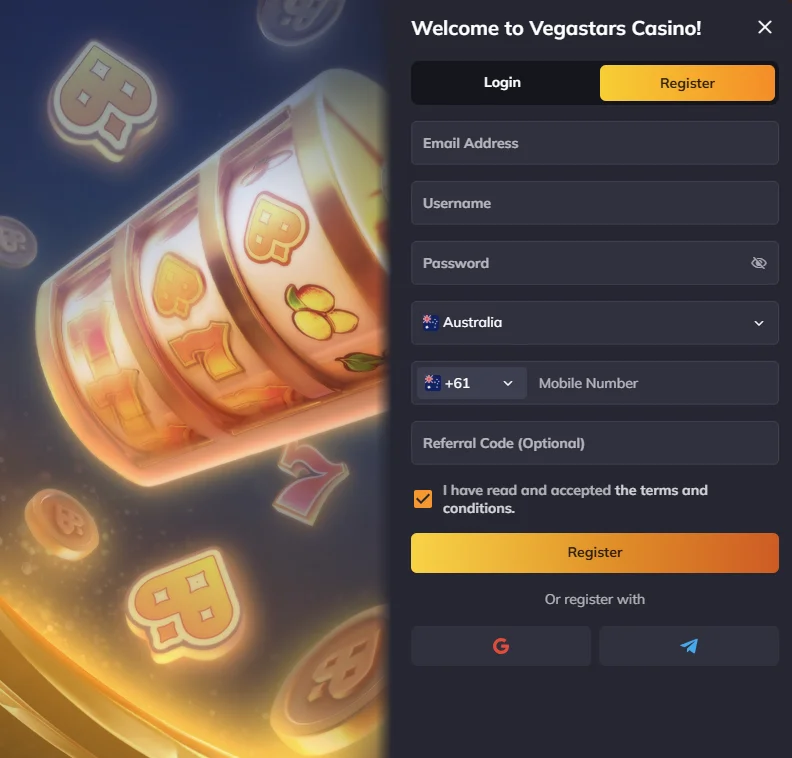
- A single credential pair works across every device with no separate app registration required.
- Password recovery is self-service and typically completes in a couple of minutes.
- Two-factor protection is available at no cost and adds meaningful security.
- Your limits, history and safer gambling controls are all reachable from one dashboard.
- Unrecognised-device prompts flag suspicious activity before damage is done.
And the drawbacks worth planning around:
- Recovery tokens expire quickly, which is unforgiving if you’re distracted mid-process.
- Biometric shortcuts and saved sessions make an unlocked phone a real liability.
- Repeated failed attempts trigger a lockout that you simply have to wait out.
- Aggressive privacy extensions and strict cookie settings can break the flow entirely.
- Access restrictions linked to self-exclusion cannot be reversed on request, by design.
Weighing those up, the sensible middle ground for most players is: two-factor on, biometrics only on a device with its own lock screen, and no saved sessions on any hardware someone else touches.
Verification and Its Effect on Account Access
Identity checks and sign-in are separate processes, but they intersect. You can generally access your account while verification is pending, yet certain functions stay gated until documents are approved. Submitting a clear photo ID and a recent utility bill or bank statement early removes that friction before it appears.
Make sure the name and residential address on your documents match your registered details exactly. A shortened first name, an old address from a previous rental, or a document image with a cropped corner are the three most common reasons a submission bounces back.
Player Protection Sitting Behind the Login
Australia has a mature framework of support services, and they operate independently of any gambling operator. If your relationship with gambling feels like it’s shifting, the tools below are free, confidential and available right now.
BetStop, the National Self-Exclusion Register, lets Australian residents exclude themselves from licensed interactive wagering services nationally for a chosen period. Gambling Help Online provides counselling and chat support around the clock, at no cost. The ACMA publishes guidance on illegal offshore gambling and enforces the Interactive Gambling Act 2001, while state and territory bodies such as Liquor & Gaming NSW and their Victorian counterpart oversee gambling activity locally.
Within your own account settings, we encourage you to use deposit caps, session reminders and cooling-off periods proactively rather than reactively. Setting a limit while you’re calm is straightforward; setting one mid-session is much harder, and that’s precisely when it matters most.
Questions Australian Players Ask About Account Access
Can I hold more than one account on your platform?
No. Our terms permit a single account per person, household and shared device. Duplicate registrations are detected through matching personal details, payment instruments and device fingerprints, and they typically result in the additional accounts being closed with any associated bonuses forfeited. If you’ve accidentally started a second registration, tell support before depositing and it can usually be sorted without penalty.
Why does the system ask me to confirm my identity when I sign in from a new phone?
Any sign-in from a device, browser or network we haven’t seen before triggers a confirmation step. It’s a straightforward anti-fraud measure: if credentials are ever stolen, the attacker still can’t complete the process without access to your email or mobile. Confirm once from the new device and it’s remembered for future sessions, so the prompt won’t repeat unless something changes again.
My verification code isn’t arriving on my mobile — what should I do?
Wait a full minute before requesting a resend, since carrier delays are common during peak evening traffic. If nothing comes through, check that the number stored in your profile is current and correctly formatted with the Australian country code. Players who’ve switched carriers or upgraded plans often forget to update this. Switching your second factor to an authenticator app removes the dependency on mobile networks altogether.
Is it safe to sign in over public Wi-Fi at a café or airport?
We’d advise against it for anything involving your balance. Open networks can be monitored, and while the connection to our website is encrypted, public Wi-Fi remains a favoured environment for credential harvesting and fake login portals. Mobile data is considerably safer for any session where you’ll enter a password or move funds. If you genuinely must use public Wi-Fi, a reputable VPN adds a worthwhile layer of protection.
What happens to my account if I register with BetStop?
Registering with the National Self-Exclusion Register blocks your access to licensed Australian interactive wagering services for the period you nominate, and that period cannot be shortened once it begins. The exclusion is administered independently of any operator. If you’re considering it, treat the decision as a serious and deliberate one, and pair it with support from Gambling Help Online so you have someone to talk things through with.
How do I stop my browser from logging me out every session?
Repeated sign-outs almost always come down to browser configuration rather than a platform fault. Check whether your browser is set to clear cookies and site data on exit, and whether a privacy extension is blocking the cookies our session relies on. Allowing cookies for the domain and switching off automatic clearing resolves it in the overwhelming majority of cases. On mobile, disabling aggressive battery-saving modes for the browser also helps keep sessions alive.